Reframing Anxiety: Why It’s Not a Personality Flaw (and What It Might Be Telling You)

Nancy Williams-Foley • 12 May 2025

If you live with anxiety, you’ve probably heard all the usual labels. "Overthinker." "Too sensitive." "Always worrying."

And maybe, somewhere along the way, you started to believe that anxiety is just part of who you are - a flaw in your wiring. A sign that you're somehow weaker or less capable than other people.


But I want to offer you a different way to look at it. Anxiety isn’t a character defect.


It’s a signal.


It’s your body and nervous system doing their best to protect you - even if their methods feel uncomfortable (or exhausting). And when we start to see anxiety not as an enemy, but as a message, something powerful begins to shift.


Anxiety Is Your Body’s Alarm System

Think of anxiety as your internal alarm system.


When you feel that familiar rush — the racing heart, tight chest, spiralling thoughts — it's your nervous system sounding the alarm. Sometimes that alarm is accurate (like when you're genuinely in danger). But often, especially after stress builds up over time, the system gets a little jumpy. It starts reacting to things that aren’t threats: an upcoming meeting, a crowded shop, a difficult conversation.


It doesn’t mean you’re broken.


It means your body has learned to stay on high alert — maybe because of past experiences, ongoing stress, or nervous system overload.


What Anxiety Might Be Trying to Tell You

Rather than asking, “Why am I like this?”, try gently asking:


“What is my body trying to tell me right now?”


Sometimes anxiety is signalling:

  • I’m overwhelmed and need to slow down
  • I’m holding too much without support
  • I’m exhausted but feel like I can’t stop
  • I’m afraid of getting it wrong or disappointing someone


When we listen in this way, anxiety becomes less about shame and more about self-awareness.


Moving from Reaction to Regulation

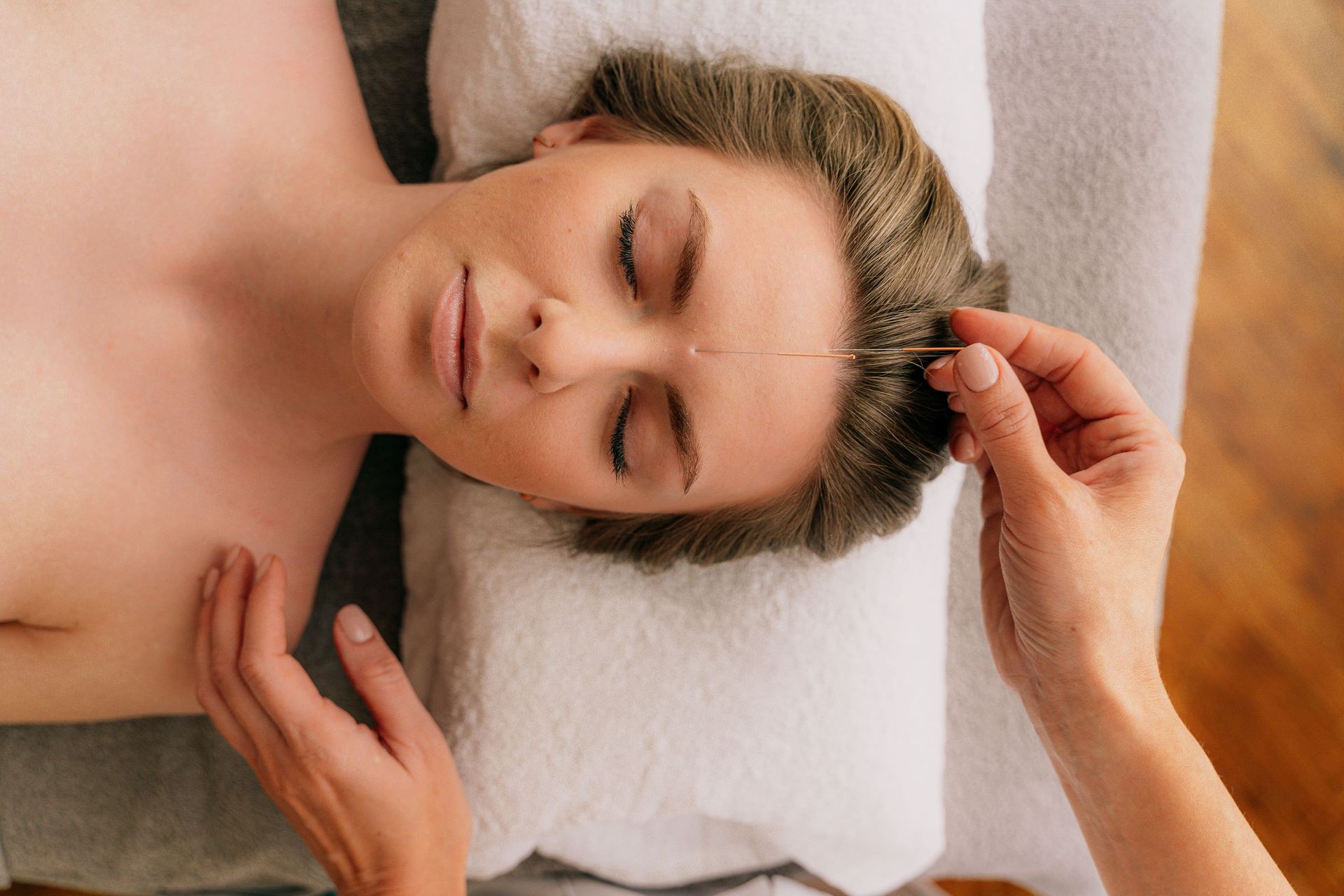
If you’ve been stuck in anxious patterns for a long time, it can feel impossible to shift. But I’ve seen again and again — in my clinic and in my own life — that small, steady nervous system support makes a difference. Therapies like acupuncture and EFT tapping work directly with the body’s stress response, helping to turn down the alarm over time. Counselling offers space to explore the deeper roots without judgement.


And simple daily practices (like grounding, breathwork, or mindful movement) help rebuild trust between your body and mind.


You Are Not Your Anxiety

It’s easy to internalise anxiety and wear it like an identity. But you are so much more than your symptoms. Anxiety isn’t a personality flaw - it’s a pattern. And patterns can shift, with the right support, care and time.


So if you’ve been feeling stuck in anxiety, I invite you to soften your self-talk. Get curious about what your body might be needing. There are ways to help you feel safer, calmer, and more grounded — not by fighting against yourself, but by working with your body. If you'd like to find out more information about the services I offer please click here.

woman hugging her knees to body
by Nancy Williams-Foley 22 July 2026
A difficult relationship with the body doesn't have to be severe to be significant. Nancy explores where it tends to come from, what it costs, and what can help.
woman looking in a round mirror
by Nancy Williams-Foley 18 July 2026
The experience of not feeling like yourself is real and significant, even when nothing is obviously wrong. Nancy explores what tends to underlie it and what helps.
man lying on grey sofa looking uncomfortable
by Nancy Williams-Foley 14 July 2026
For many people, stopping doesn't lead to rest - it leads to guilt and restlessness. Nancy explores where that pattern tends to come from and what can shift it.
woman lying down with laptop on body and her hands on her head looking worried
by Nancy Williams-Foley 10 July 2026
Feeling on edge when there's nothing obvious to worry about is more common than people realise. Nancy explores why the nervous system stays alert and what helps.
head and shoulders of a woman lying on a bed with eyes closed receiving acupuncture on her forehead
by Nancy Williams-Foley 8 July 2026
For people who are always slightly on edge, acupuncture can help shift the nervous system's baseline. Nancy explains how it works and what to expect from treatment.
man and woman sitting on a sofa ing each other talking
by Nancy Williams-Foley 4 July 2026
Choosing between individual and couples therapy isn't always straightforward. Nancy explores what tends to point in each direction and how to think through the decision.
women in a pink jacket leaning on railings looking out to sea
by Nancy Williams-Foley 1 July 2026
The space between who you were and who you're becoming can be disorienting. Nancy explores what that transition involves and why it needs patience more than pressure.
man with head in his hands
by Nancy Williams-Foley 24 June 2026
Stress doesn't always feel like worry. Discover how prolonged stress can affect your body, nervous system and emotional wellbeing, and how integrative therapy can help.
Couple holding hands
by Nancy Williams-Foley 20 June 2026
Wondering what happens in couples therapy? Discover what to expect from your first session, common misconceptions and how therapy can support your relationship.
anxiety
by Nancy Williams-Foley 16 June 2026
Health anxiety can make physical symptoms feel overwhelming. Learn how anxiety affects the body, why reassurance doesn't last and how therapy can help.
women crying looking out of window
by Miki Roddin 13 June 2026
Grief isn't only about death. Discover why relationship breakdown, miscarriage, estrangement and life changes can bring grief, and how therapy can help.
by Nancy Williams-Foley 10 June 2026
Most couples have one. The argument that keeps coming back - different surface, same shape. It might be about the division of household labour, or money, or how much time is spent with respective families, or who initiates intimacy and who doesn't.
More posts