Healing: The End of Conflict Within Yourself

Nancy Williams-Foley • 16 February 2025

Healing: The End of Conflict Within Yourself

As humans, we long for peace, yet so often, we find ourselves locked in quiet battles within—torn between what we desire and what we feel we deserve, between the past and the present, or between who we are and who we think we should be. Healing, at its core, is the process of resolving these internal conflicts. It’s about coming back into harmony with yourself, step by step.


The Inner Battles We Carry

Imagine carrying a bag of heavy stones wherever you go. Each stone represents something—resentment, guilt, fear, or shame. Over time, the weight slows you down, but because you’ve carried it for so long, it feels normal. You barely notice it anymore—until one day, someone asks, “Why are you carrying that heavy bag?”


That simple question plants a seed. You start to wonder: Do I really need to carry this? Maybe you even set the bag down or take out one or two stones, marveling at how much lighter you feel. This is where healing begins: with the awareness that peace is possible.


A Client’s Story (Shared with Permission)

Emma, a client I worked with, came to therapy struggling with chronic anxiety. Beneath her polished exterior was a woman who constantly second-guessed herself, doubting whether she was “enough” for anyone—including herself. She described her mind as a battlefield, with one part of her demanding perfection and the other begging for rest.


Through our work together, Emma began to understand the root of this conflict: a childhood filled with expectations that taught her love had to be earned through achievement. Her adult self no longer needed to earn love, but her inner child didn’t know that yet.


One day, Emma had a breakthrough. During a simple yet powerful visualisation exercise, she imagined her present self meeting her younger self—reassuring that little girl that she was already enough, just as she was. Emma wept as years of tension began to soften. That moment didn’t fix everything, but it marked the beginning of peace.


Over time, Emma’s anxiety eased. She stopped treating herself as a problem to solve and started embracing herself as someone worthy of joy and rest.


Your Journey to Peace

Emma’s story is just one example of how healing inner conflict can transform a life. Your own inner struggle may look different—perhaps it’s self-doubt, guilt, or the belief that you’re unworthy of love. Whatever it may be, know this: healing is possible.


Ask yourself: What inner conflict am I holding onto? What would my life feel like without it?


Therapy offers a safe, compassionate space to explore these questions and begin the journey toward inner harmony. It’s not about erasing all challenges but learning how to approach life from a place of peace instead of war.


If you’re ready to lay down the stones you’ve been carrying, I invite you to connect with me. Together, we can explore the path toward peace and discover the freedom that comes with true healing.


Let Peace Begin Within You.


You can get in touch here.


woman tapping side of head
by Nancy Williams-Foley • 9 October 2026
Shame resists being spoken about - which is part of why it stays so long. EFT offers a way to work with it that doesn't require full disclosure first.
women lying on sofa in a therapy session
by Nancy Williams-Foley • 6 October 2026
Many people know they're struggling long before they seek support. Nancy explores what keeps capable, self-sufficient people from asking for help - and what changes when they do.
therapy session
by Nancy Williams-Foley • 2 October 2026
Research consistently shows the therapeutic relationship matters more than technique. Nancy explores what a good one actually looks and feels like - and how you know when it's working.
women at a desk over with laptop and head in hands
by Nancy Williams-Foley • 29 September 2026
Some things resist language - early experiences, trauma, feelings without a clear story. EFT works with what's present in the body and doesn't require words first.
woman sitting up in bed at night with head in hands
by Nancy Williams-Foley • 25 September 2026
Stress and burnout aren't the same thing - and treating them as if they are can make recovery harder. Nancy explains the difference and what it means for getting better.
close up of woman crying
by Nancy Williams-Foley • 22 September 2026
Uncertainty about whether to start therapy is common - and rarely means it won't be useful. Nancy explores the reservations that most often stop people from beginning.
man speaking in front of people
by Nancy Williams-Foley • 19 September 2026
Performance anxiety is a physiological response that preparation alone can't override. EFT works directly with the body's reaction - and can change what's possible in high-stakes moments.
close up of persons hands together who sitting facing another person
by Nancy Williams-Foley • 15 September 2026
Integrative therapy appears on many therapist profiles but isn't always explained. Nancy sets out what it actually means - and what it looks like in practice.
man sitting at table leaning his head on his arms in front of him
by Nancy Williams-Foley • 12 September 2026
Grief isn't only about bereavement. People grieve relationships, lost futures, and childhoods that weren't what they should have been. Nancy explores what this can look like.
women sitting in her kitchen talking on her laptop
by Nancy Williams-Foley • 8 September 2026
Online therapy removes the practical and psychological friction that often stops people from starting. Nancy explores why it works - and when it might suit you better than you'd expect.
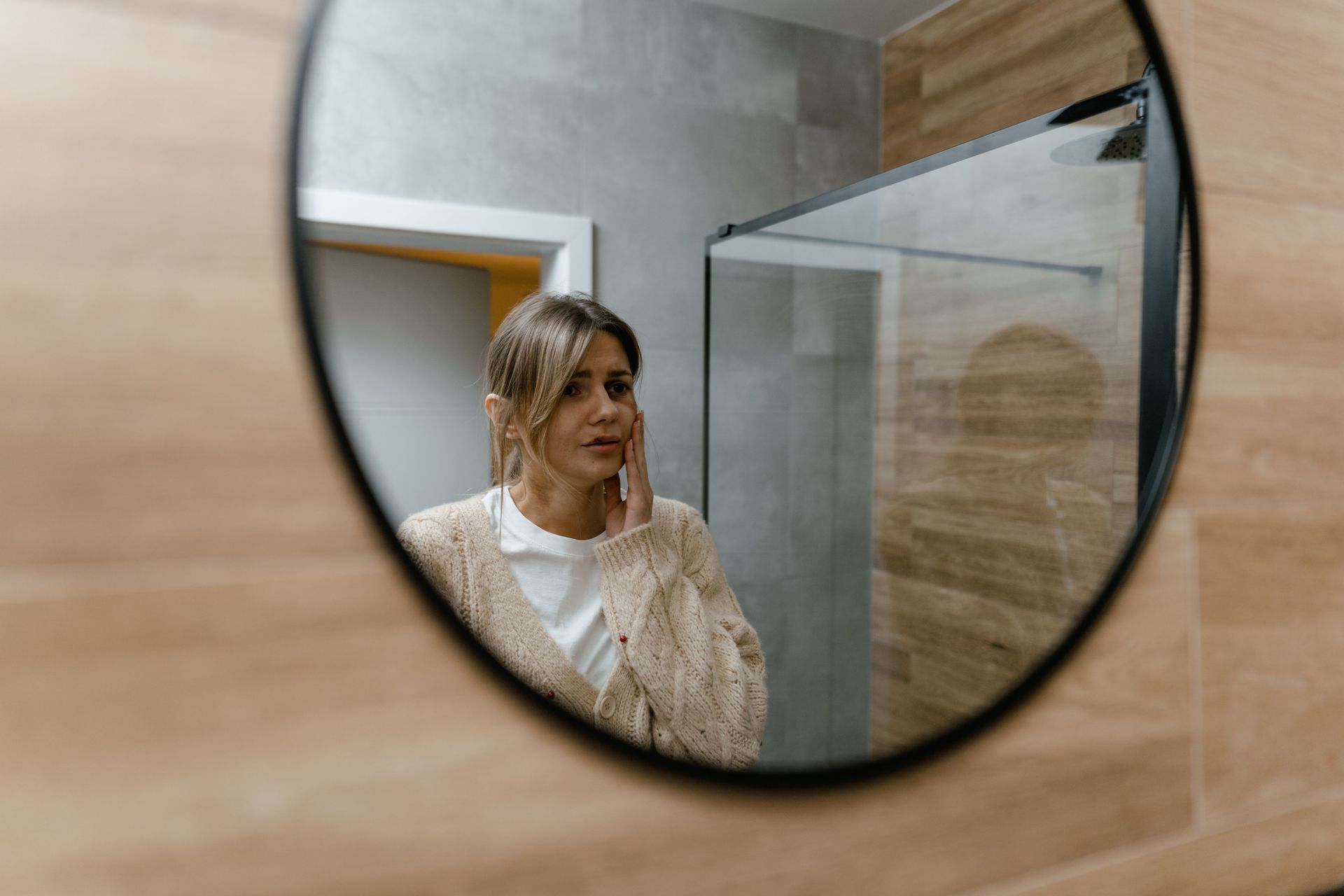
Woman looking in a round mirror touching face
by Nancy Williams-Foley • 4 September 2026
Fear of being seen isn't just shyness - it lives in the body. EFT can reduce the charge behind that response and gradually change what feels possible.
woman sitting on sofa with laptop on lap
by Nancy Williams-Foley • 1 September 2026
Not sure what to expect from a first therapy appointment? Here's an honest account of what it actually looks like - and why it's rarely what people imagine.
More posts